
Mills County Warrant Checks
Begin with Iowa Courts Online, the Judicial Branch's free electronic docket search. Enter a name. Pick Mills County when that control appears. A case ID or citation number works better than a name, since it keeps similar people apart. Open the docket and read the case type, filed date, charges, hearings, events, disposition, court debt, and most recent update. A failure-to-appear or warrant entry is just one point in the timeline. A later appearance, return, recall, or payment can change the picture. For a direct answer, call the Mills County Clerk of Court at 712-527-4880 with the case ID. The Sheriff's Office at 712-527-4871 handles law-enforcement routing. Jail questions go to 712-527-4275. If an office holds a relevant existing record, use the county public-information process.
- Search the official Iowa docket by name, case ID, or citation.
- Check that the county and case details match.
- Read every later event, not one isolated line.
- Confirm the court record with the Mills clerk.
- Ask the sheriff or issuing police agency about releasable enforcement status.
Two Glenwood Warrant Offices
Glenwood hosts both warrant offices, and their jobs do not overlap. The Mills County District Court and Clerk of Court sit at 418 Sharp Street on the town square. There the clerk keeps court records, offers public-terminal access, and explains docket procedure. The Mills County Sheriff's Office works from 600 Industrial Road. It provides county law enforcement, runs the jail, executes legal process, and routes sheriff-record requests.
Mills County Clerk of Court
418 Sharp Street, Glenwood, Iowa 51534
712-527-4880
CountyClerk.Mills@iowacourts.gov
Mills County Sheriff’s Office
600 Industrial Road, Glenwood, Iowa 51534
712-527-4871
Weekdays, 7:30 a.m. to 4:00 p.m.
Call ahead before appearing in person when an arrest is possible. A Mills County attorney can contact both offices and sort out the right process. The clerk never executes warrants; the sheriff never writes a court order.
Warrants in Mills County: The Main Types
Iowa's terminology matters here. An arrest warrant follows a complaint or affidavit plus a judicial finding of probable cause under Iowa Code chapter 804. Willfully miss a required appearance and a warrant can follow under section 805.5. People call that a bench warrant. The plain-language label is handy, but Mills County publishes no separate bench-warrant database. A search warrant under chapter 808 authorizes a search, not an arrest. Its papers may stay confidential until execution and return.
| Record type | What starts it | Where to begin |
|---|---|---|
| Arrest warrant | Probable-cause complaint or affidavit | Court docket, clerk, issuing agency |
| Failure to appear | Willful missed required appearance | Underlying case and Clerk of Court |
| Search warrant | Judicial approval to search | Court custodian, subject to confidentiality |
| Traffic matter | Citation, missed date, or unpaid obligation | Iowa Courts Online and clerk |
| Civil process | Writ, subpoena, or notice | Sheriff’s civil-process function |
Civil writs and notices are not criminal warrants. Juvenile and confidential Mills County cases carry special access rules.
Iowa District Court Holds Local Cases
Iowa runs one unified state trial-court system. The 1973 Unified Trial Court Act ended the old justice-of-the-peace, mayor's, municipal, and police courts. Mills County court records therefore sit inside the Iowa District Court structure, not in a modern standalone "Mills municipal court." District-court magistrates hear simple misdemeanors, traffic citations, county and municipal infractions, and other matters assigned by law. They also conduct preliminary hearings and may issue search warrants. That structure explains why a Glenwood traffic or municipal-infraction event can appear in state District Court records. It also prevents a common search error: hunting a nonexistent local court category while skipping the Clerk of Court. A city may still keep police reports, parking records, or other municipal records. The record's subject and custodian decide the right contact. Note: City parking violations are handled by the city clerk and are not listed or payable through Iowa Courts Online's payment service.
Mills County Warrant Records: What They Show
A public case result is a set of fields, not a yes-or-no warrant certificate. The case ID tells one docket from another. Case type names the broad Iowa category. Charges and counts list what was filed. Filed and create dates mark when the record was entered, which may differ from a warrant's issue date. Events can include hearings, failures to appear, issuance, returns, payments, or dispositions.
| Case ID | The court identifier used to distinguish people and cases. |
|---|---|
| Case type | An Iowa category such as felony, misdemeanor, traffic, or civil infraction. |
| Event | A dated action in the court timeline. |
| Disposition | The court’s recorded outcome, not present enforcement status. |
| Status or last update | Online fields that still require clerk confirmation. |
| Bail or set amount | A release field when public and entered. |
| Receipt or payment | A financial event that does not alone prove warrant recall. |
A sample identifier like MILLS-CASE-ID shows how the format works without pointing to any real person's record. Trust the actual case ID the official Mills County system displays.
Blank Mills Searches Need Follow-Up
A blank result does not prove that no Mills County warrant-related matter exists. Juvenile, sealed, expunged, confidential, and restricted records may simply not appear. Some document images live only on courthouse public terminals. Older cases can be incomplete. A newly received case may take time to enter. The payment search warns that a citation can take 14 to 21 days to appear. So tighten the search itself. Try fewer letters, remove extra spaces, confirm the county, and tell a zero from the letter O in a case ID. Official help says case IDs run 17 characters, in capital letters. If a possible match stays unclear, call the clerk with the exact identifier. Stay on the official path rather than a commercial instant-record service.
Current means confirmed.
An online event can be old or followed by later court action. Only the responsible court or agency can confirm present status.
Mills County Warrants: Who Issues, Who Serves
Four offices split the work in Mills County. A judicial officer signs an arrest warrant only after a complaint, an affidavit, and a probable-cause review. The Clerk of Court keeps the court record and routes it. Service falls to the Mills County Sheriff or another police agency. The Mills County Attorney then prosecutes qualifying state crimes and county ordinances. No single office handles all four roles. The county attorney's criminal-justice outline traces the full sequence: investigation, arrest or citation, a warrant when the suspect cannot be found and the evidence supports one, initial appearance, and bond. That first appearance comes within 24 hours of arrest. The judicial officer still controls the actual case and the release decision. Sheriff history information says the office patrols 447 square miles, contracts with six communities, runs the jail, and receives arrests made by deputies, city police, or the Iowa State Patrol. Even so, record custody can differ from agency to agency in Mills County.
The Mills Sheriff Routing Hub
The Mills County sheriff's office gives the public a good picture of how enforcement works, but it posts no searchable active-warrant list and no roster anyone can download. That does not mean Mills County has no outstanding warrants. It just means a warrant search runs through the court, the clerk, and formal records requests instead. The sheriff's page does show the county law-enforcement office itself, so view the Mills County Sheriff source page for its current contacts and jail routing before you call.
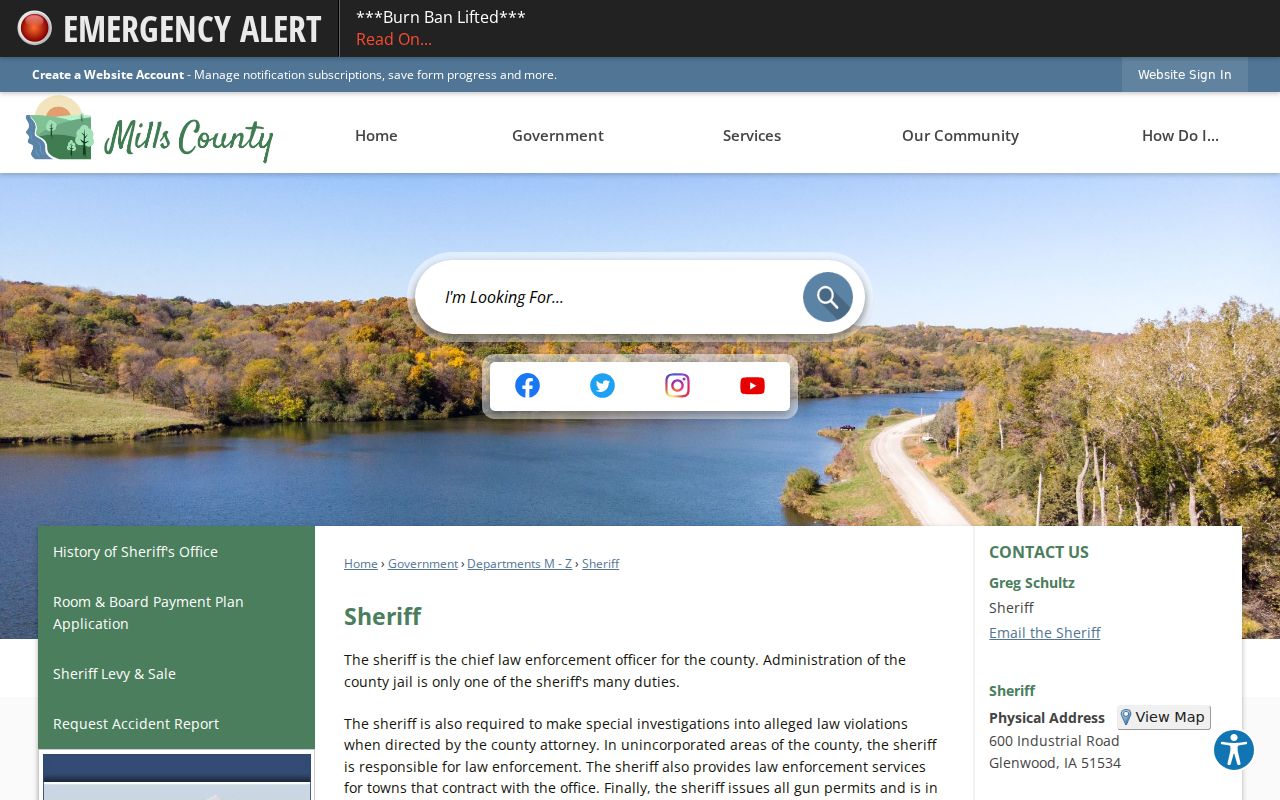
Need the department rather than the docket? The court keeps the official case record. The official sheriff department directory lists the office contact channel in Mills County.
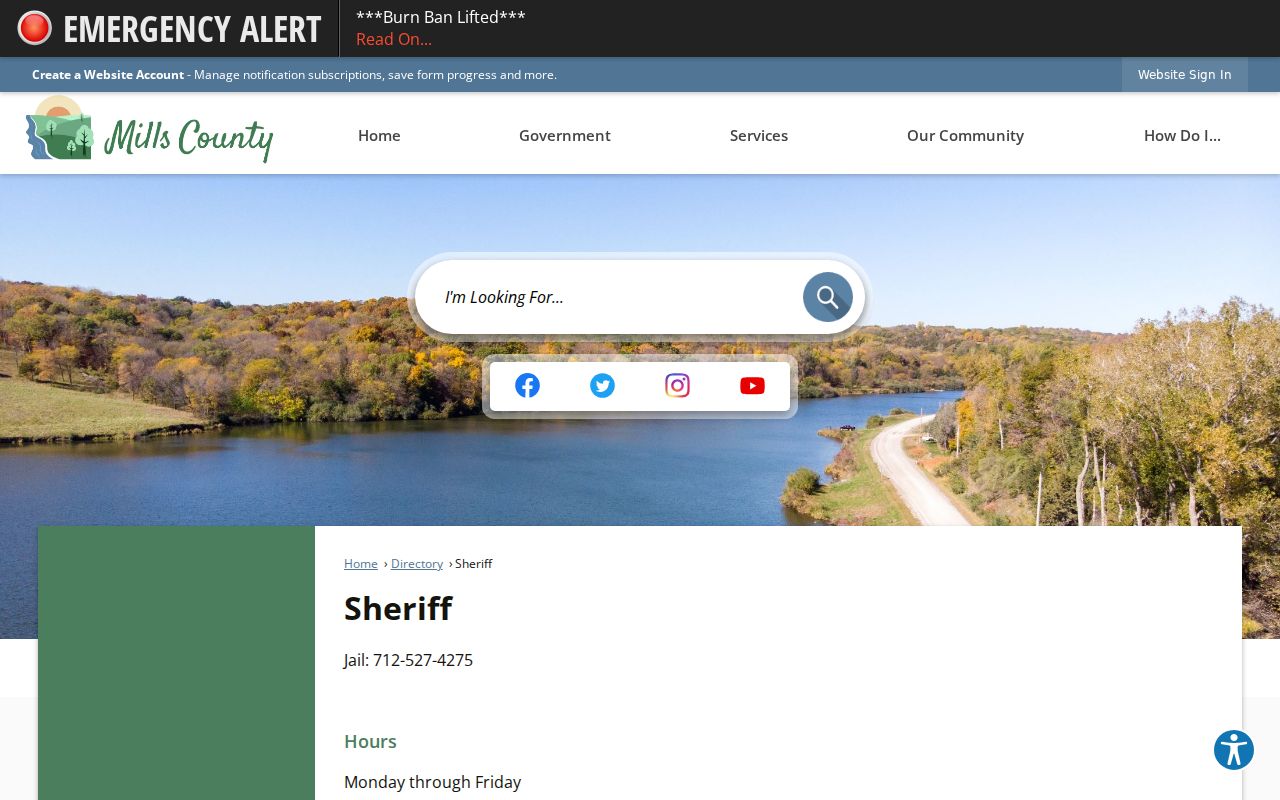
That directory view is handy when the main sheriff page changes. Mills County also posts an official staff directory routing questions to the clerk, sheriff, jail, county attorney, and records requests.
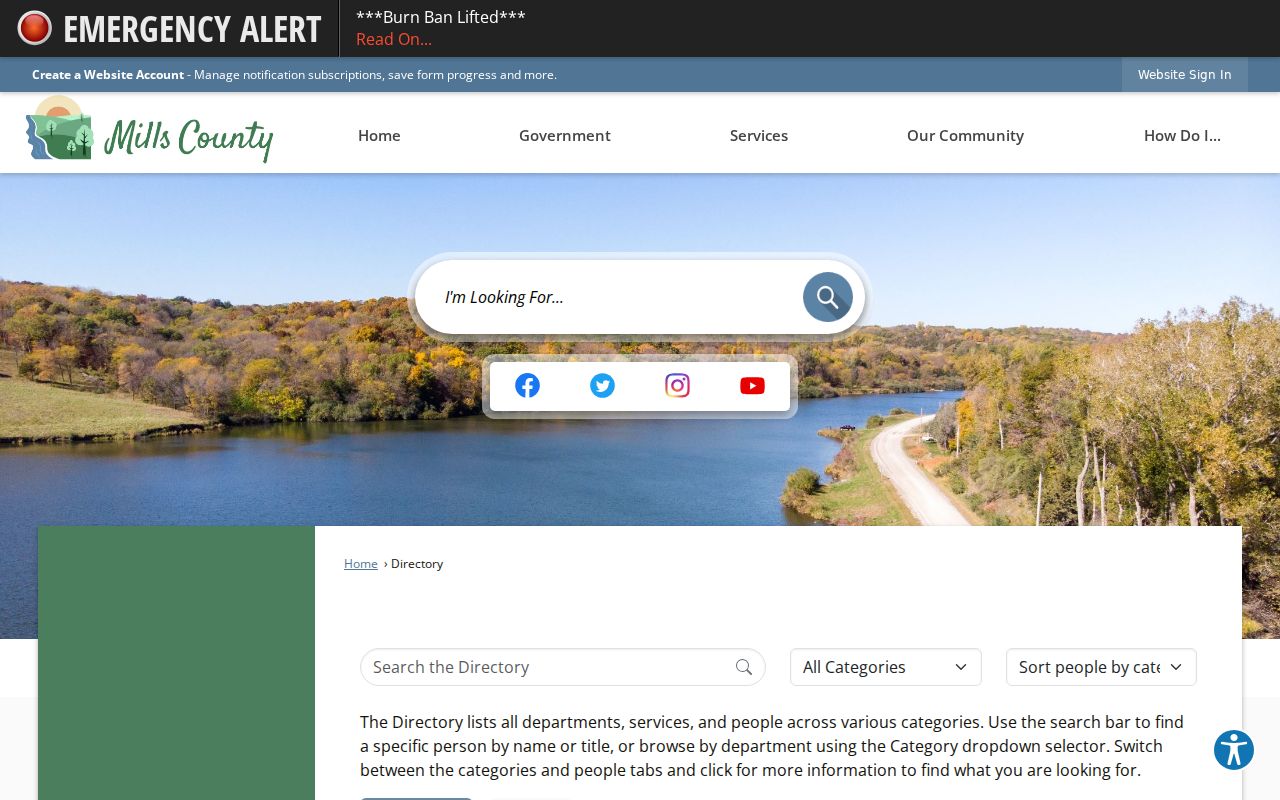
The directory sorts a court-record question from a sheriff, jail, or county records request. A jail-only issue goes to 712-527-4275. For a sheriff record, ask for the existing record rather than a newly compiled list. The records form lets you choose mail, email, fax, pickup, or inspection.
Handling a Mills County Warrant
Start by pinning down the court, the case ID or citation, and the event behind the Mills County warrant. Then call the Clerk of Court and ask which procedure applies now. The answer might be hiring counsel, appearing on a set date, paying, posting bond, or some other court action. If the clerk sends you to the sheriff or police, use that agency's official line, and keep every receipt, order, payment confirmation, and the date and name of each person you spoke with. Payment and warrant status are two different questions, though. Iowa court debt can pile together fines, surcharges, restitution, and costs; it generally turns delinquent after 30 days, and the clerk may offer a payment plan. Even so, paying the balance does not automatically recall a warrant or fix a missed appearance, so ask the court what judicial action is required.
Act safely.
Contact the clerk, an attorney, or the responsible agency before appearing in person. Do not pay anyone who threatens immediate arrest by phone.
RESTART and STAR in Mills
The Mills County Attorney offers a local traffic-disposition path through RESTART and STAR classes. RESTART runs four hours. STAR runs eight. An eligible violation gets dismissed only if the county attorney approves the application, you finish the right class in the assigned month, the required certificate is filed, and court costs are paid. Eligibility is never automatic. A commercial driver's license holder is out, and so is anyone who took RESTART or STAR within three years of the citation. The official form adds two deadlines: the completion certificate must reach the clerk or attorney seven days before the court date, and costs must be paid within 30 days. Other defensive-driving certificates will not substitute, and the county attorney keeps full discretion. The program can settle an eligible citation in Mills County before it grows into a bigger court problem, but it is not a warrant-amnesty event. Mills County runs no warrant roundup or amnesty program. Anyone with a missed date or a possible warrant still needs to contact the clerk.
Warrant Record Access Under Iowa Law
Iowa Chapters 21 and 22 build the state's sunshine and public-records framework. Anyone may ask to examine or copy public records, subject to statutory exceptions, and requests can arrive in person, by phone, email, or writing as long as the record can be identified. The law does not make an agency create a report that does not exist, do unlimited research, or answer a legal question. The Mills public-information route forwards each request to the department holding the record. Its form asks for dates, locations, people involved, incident type, delivery preference, and contact details. It publishes no warrant-specific fee or response promise, so ask about costs before they pile up.
- Describe a defined existing record.
- Give a case or citation number when known.
- Choose inspection or a copy format.
- Request releasable portions.
- Ask for the legal basis for withheld portions.
Mills County may withhold or redact juvenile records, confidential investigations, sealed matters, personal identifiers, and safety-sensitive details.
Mills Warrant Calls and Scams
Scammers have worked Mills County hard. In June 2026, the Iowa Judicial Branch warned about calls, texts, and mail claiming unpaid fines, missed jury service, or an active warrant. Real courts never demand money, Social Security numbers, prepaid cards, or bitcoin through such messages. A caller’s urgency means nothing. Even a local-looking caller ID does not establish that a Mills County warrant exists. Hang up instead. Then pull the court or sheriff number from an official government page, call it yourself, and offer a case ID or citation if you have one. Ask whether the public record actually contains the claimed event, and what official steps follow. Never wire money because someone threatens arrest. When the risk feels high, an attorney can contact the issuing court for you.
- Issued
- A judicial officer created the warrant.
- Executed
- Law enforcement acted on it.
- Returned
- The process came back to the court or clerk.
- Recalled or quashed
- Later court action changed or ended the warrant.
- Failure to appear
- A missed required appearance that may trigger Iowa’s statutory response.
City Warrant Records in Mills County
Glenwood holds the county seat and runs its own police department and city records. Beyond that, city warrant records get thin. The sheriff’s history says Mills County contracts with six other communities for law enforcement, though Tabor’s current arrangement deserves a quick confirmation. If you live in Malvern, Tabor, Emerson, or Silver City, start with the Mills County court and sheriff unless a current city source points elsewhere.
Know where each record lives before you ask. A city parking ticket stays with the city clerk who filed it. A District Court matter belongs to the Mills County clerk instead. Police reports go to whichever agency wrote them.
Mills County Courthouse Continuity
The courthouse at 418 Sharp Street anchors the local record trail in Mills County. The county’s comprehensive plan names Glenwood the county seat and sets the courthouse on the town square. The current building went up in 1959, with accessibility and storage work finished in 2013. Those details still matter. Online access does not replace courthouse public terminals, nor the clerk as custodian of the official record. The sheriff’s own history adds a second local reference; open the source for Mills County sheriff history to confirm its context.
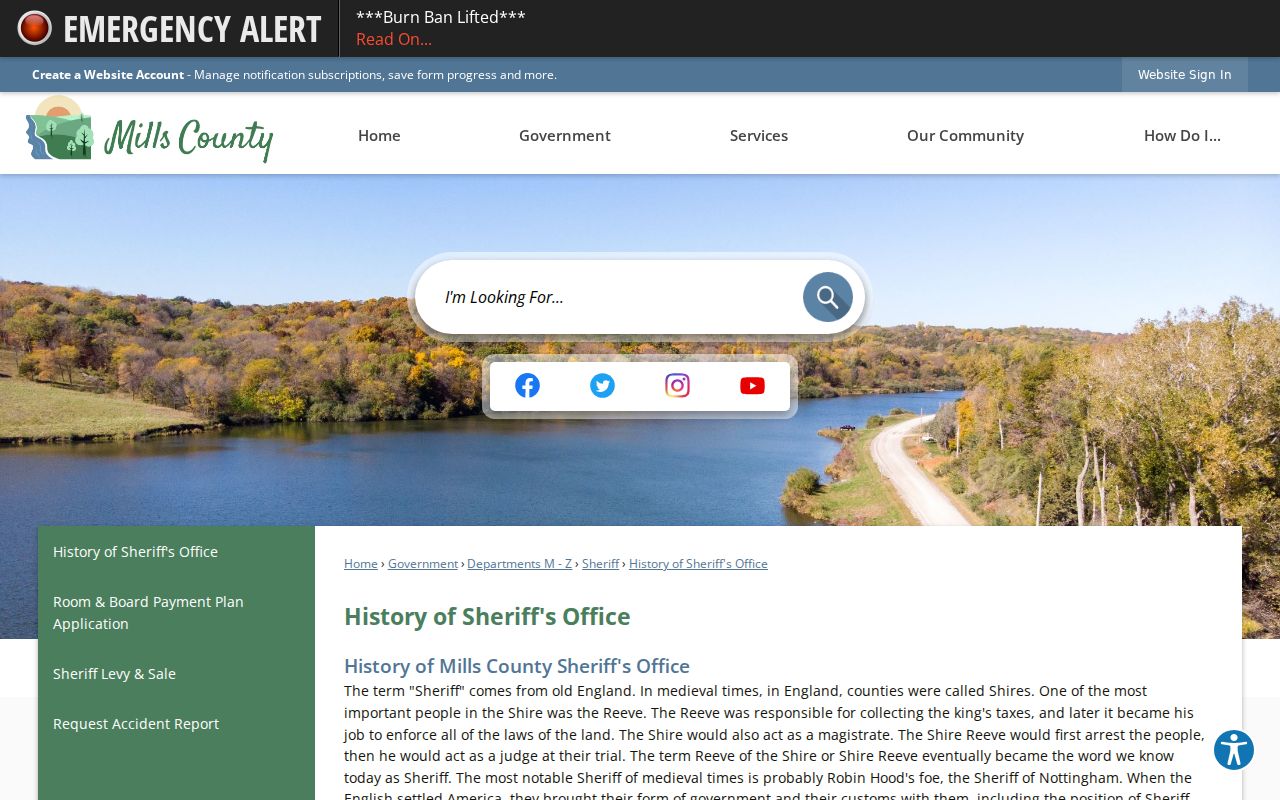
Together they tie today’s warrant-record path to the Mills County office that handles service, custody, and legal process across a largely rural county. Online case information is handy, but it is not the official court record. The paper sits at courthouse terminals. Call the clerk before you go, and confirm access, hours, and whether the document you want is public.